


Technical information
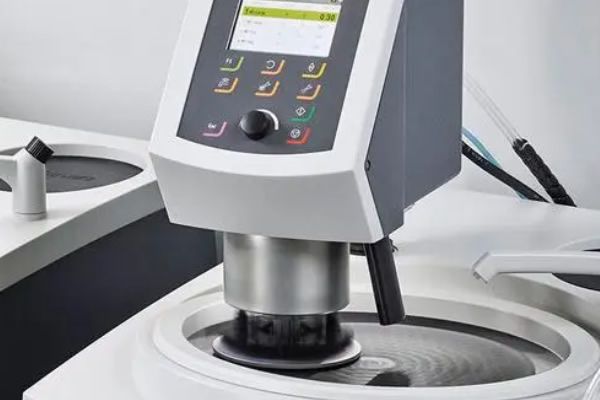
What are the methods and characteristics of ultra-precision grinding and polishing?
Grinding is a common semi-finishing and finishing method. The grinding wheel is the cutting tool used in grinding. This process is the combined result of sliding, scratching, and cutting on the workpiece surface, produced by a large number of abrasive particles randomly distributed on the grinding wheel surface. The basic characteristics of grinding are as follows:
1. High grinding speed and high temperature
High grinding speeds lead to high grinding temperatures. In general cylindrical grinding, the speed is v = 35 m/s, and in high-speed grinding, v > 50 m/s. Between 80% and 90% of the cutting heat generated during grinding is transferred to the workpiece (10%–15% is transferred to the grinding wheel, and 1%–10% is removed by the chips). Furthermore, the thermal conductivity of the grinding wheel is very low, which can easily cause grinding burns and microcracks in the workpiece. Therefore, a large amount of cutting fluid must be used to reduce the grinding temperature.
2. High precision and low surface roughness
Grinding allows for high machining accuracy and low surface roughness values. Accuracy can reach IT6–IT4, and surface roughness can reach Ra 0.8–0.02 μm. Grinding is used not only for finishing but also for pre-grinding, coarse grinding, and heavy-duty grinding.
3. High normal grinding force
Due to the large negative rake angle of the abrasive grains and the large dulling radius rₙ of the cutting edge, the subsequent grinding force is greater than the tangential force. This increases the contact width between the grinding wheel and the workpiece, which can cause elastic deformation in the workpiece, tooling, and machine tool, affecting machining accuracy. Therefore, when machining workpieces with low rigidity (such as slender shafts), appropriate measures must be taken to prevent workpiece deformation from affecting accuracy.
4. Self-sharpening effect of the grinding wheel
During the grinding process, the grinding wheel exhibits a self-sharpening effect. The abrasive grains fracture, creating new sharp edges and corners, and as some grains break away, a new layer of sharp abrasives is exposed, partially restoring the wheel's cutting ability. This phenomenon enhances the grinding process.
5. Ability to grind materials of different compositions
SAINKO grinding solutions allow the processing of materials of different compositions and hardness levels by selecting specific abrasives and grinding technologies adapted to each application.
Depending on the requirements for flatness, roughness, geometry, tolerances and surface finish, it is possible to configure different grinding and polishing processes using plates, abrasives, pads and working parameters optimized for each material.
SAINKO technology allows working on technical steels, hard metal, ceramics, zirconia, sapphire, aluminum, copper, stainless steel, sintered components and other high-precision technical materials, guaranteeing process stability, repeatability and maximum surface finish quality.
What are the main points of polishing?
1. Orange peel effect on the surface
- Reduce polishing pressure and use larger stones or wooden strips with plaster.
- Use soft felts, polishing cloths, and diamond paste.
- Reduce the grit difference between the grinding and polishing phases.
- Verify that the hardness of the mold or part is adequate.
2. Surfaces with pores or micro-defects
- Check the hardness of the mold or processed material.
- Reduce grain skipping between grinding and polishing operations.
- Use fine diamond paste for the final surface finishing stages.
- For optical or mirror finishes, it is recommended to perform the final polishing manually using high-quality abrasives and consumables.
3. Insufficiently smooth surface
- Use high-quality polishing abrasives and flat stones to improve surface uniformity.
- Always work with the largest possible contact surface to obtain a homogeneous finish.
4. Uneven polishing in interior holes
- Perform proper pre-grinding before the fine finishing process.
- Ensure proper surface preparation to achieve uniformity in internal polishing.
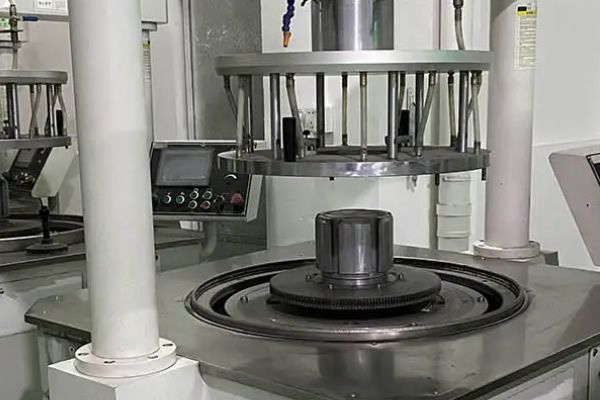
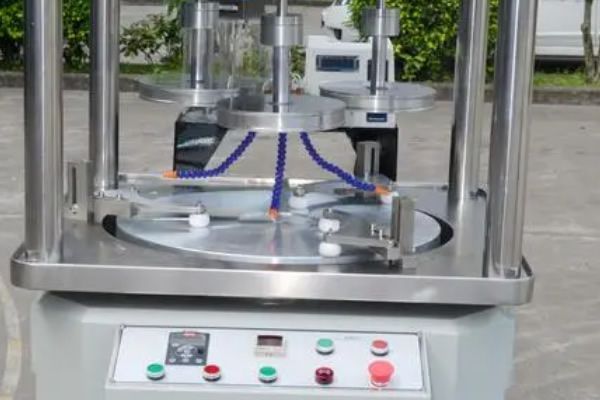
What are the differences between the mechanism and characteristics of lapping and polishing?
POLISHING
Polishing refers to the processing method used to obtain a smooth surface by using polishing discs made of low-elasticity materials (cotton cloth, felt, artificial leather, etc.) rotating at high speed, or soft elastic or viscoelastic materials (plastic, asphalt, paraffin, tin, etc.) rotating at low speed, with the addition of a polishing agent. In short, there is no essential difference between grinding and polishing, except for the choice of abrasive and the material of the lapping tool.
Polishing generally does not improve the form or dimensional accuracy of a workpiece. Polishing typically uses fine abrasive particles smaller than 1 µm. Polishing wheels are usually made of soft metals or non-metallic materials such as asphalt, paraffin, synthetic resin, artificial leather, tin, etc. The force exerted by the abrasive on the workpiece is small, so the workpiece does not crack. Traditionally, the machining method using hard abrasive tools is called grinding, and the method using soft abrasive tools is called polishing. In reality, in the field of ultra-precision machining, there is no difference between ultra-precision grinding and ultra-precision polishing.
LAPPING
Grinding offers unparalleled advantages over other machining technologies: it is a typical "direct creation" or "evolutionary processing" process. This means that certain measures are taken on the machine tool (micro-feed, low grinding speed, continuous changes in grinding direction, etc.) to directly machine workpieces with a precision exceeding that of the machine tool itself. This is because, when the lapping tool comes into contact with the workpiece, the modeling and simulation of grinding marks on non-ultra-precise surfaces automatically selects the local protrusions for machining, so that material is only removed from the raised areas of both surfaces. Thus, the lapping tool and the workpiece correct each other, and the precision gradually improves. The machining accuracy of ultra-precision lapping is almost independent of the precision of the machine tool's relative movement and is determined primarily by the contact and pressure characteristics between the workpiece and the lapping tool, as well as by the shape of the relative movement path and other factors.
Grinding refers to the finishing of a machined surface through the relative movement between the grinding tool and the workpiece under a specific pressure. Fine-grit grinding wheels are generally used for grinding.
Polishing consists of further smoothing the surface after grinding, removing any residual marks from the grinding process, and the polishing agent makes the surface shine naturally.
Polishing with coarse wax: After sanding with sandpaper, the sanding marks on the surface are further removed, restoring its flatness and initial shine. The wax should be applied evenly over a designated area (the individual polishing area should not exceed the length and width of one arm). The polisher speed should be controlled between 1200 and 2000 rpm. Initially, the polishing disc is pressed with medium pressure to polish the surface at a uniform speed; the surface is observed, and once the sanding marks are clearly removed, the pressure is reduced to remove any remaining wax and restore some shine to the surface. After polishing, a microfiber cloth is used to clean any remaining coarse wax and dust from the surface.
During the grinding and polishing process,
What are the aspects to consider?
in the polishing of the mold?
Points to consider when polishing with sandpaper
1. Sanding with sandpaper requires the use of soft wooden or bamboo rods. When sanding curved or spherical surfaces, cork rods allow for better adaptation to the surface's curvature. Harder woods, such as cherry, are more suitable for sanding flat surfaces. The end of the wooden rod should be trimmed to match the shape of the steel surface, thus preventing deep scratches caused by sharp edges of the rod (or bamboo) coming into contact with the steel surface.
2. When using different grits of sandpaper, the polishing direction should be changed between 45° and 90° so that the marks left by the previous grit are visible. Before changing to a different grit of sandpaper, the polished surface should be carefully cleaned with 100% pure cotton soaked in a cleaning solution such as alcohol, as even a small abrasive particle left on the surface can ruin the entire polishing process. This cleaning process is also essential when switching from sandpaper to diamond polishing compound. All abrasive particles and kerosene must be completely removed before continuing to polish.
3. To avoid scratches and burns on the surface of the piece, extreme care must be taken when polishing with #1200 and #1500 grit sandpaper. Therefore, it is necessary to apply light pressure and use a two-stage polishing method. With each type of sandpaper, polish twice in two different directions, rotating between 45° and 90° between directions.
Points to consider in grinding and polishing with diamond paste
1. This polishing should be done with the least possible pressure, especially when polishing pre-hardened steel parts and when using fine-grit pastes. When polishing with #8000 grit abrasive paste, the usual load is 100–200 g/cm², but it is difficult to maintain this pressure precisely. To make it easier, a thin, narrow handle can be made on the wooden rod, for example, by adding a piece of copper, or by trimming part of the bamboo to make it more flexible. This helps control the polishing pressure and ensures that the pressure on the mold surface is not excessive.
2. When using diamond paste for polishing, not only is it necessary that the work surface be clean, but the operator's hands must also be carefully cleaned.
3. Each polishing operation should not be prolonged. The shorter the time, the better the effect. If polishing is carried out for too long, defects such as "orange peel" and "pitting" may appear.
4. To achieve a high-quality polish, methods and tools that easily generate heat should be avoided. For example, when polishing with a polishing wheel, the heat generated can easily cause an "orange peel" effect.
5. When stopping the polishing process, it is very important to ensure that the surface of the part is clean and that all abrasives and lubricants have been carefully removed. Next, a protective anti-corrosion coating should be applied to the surface of the mold.
Since mechanical polishing is primarily performed manually, the polishing technique remains the main factor affecting the final quality. In addition, the mold material, the surface condition prior to polishing, and the heat treatment process also play a role. High-quality steel is a prerequisite for achieving a good polished finish. If the steel's surface hardness is uneven or its properties are not homogeneous, difficulties often arise during polishing. Similarly, inclusions and porosity present in the steel are detrimental to the polishing process.
Influence of different hardness levels on the polishing process
Increased hardness increases the difficulty of grinding but reduces surface roughness after polishing. As hardness increases, the polishing time required to achieve a lower surface roughness also increases. At the same time, with increased hardness, the likelihood of overpolishing decreases accordingly.
Influence of the surface condition of the part on the polishing process
During cutting and machining processes, the surface layer of steel can be damaged by heat, internal stresses, or other factors. Inappropriate cutting parameters will negatively affect the polishing result. The surface obtained after electrical discharge machining (EDM) is more difficult to polish than the surface resulting from conventional machining or heat treatment. Therefore, before completing the EDM machining, precision gauges and standard EDM parameters must be used for fine-tuning; otherwise, a hardened surface layer will form. If the spark finishing parameters are not selected correctly, the maximum depth of the heat-affected zone can reach 0.4 mm. The hardness of this hardened layer is greater than that of the base material and must be removed. Therefore, it is advisable to add a roughing process to completely remove the damaged surface layer and obtain a metal surface with uniform roughness, which serves as a good base for polishing.
The most important aspect of ultra-mirror polishing is the grit size used. The distance from the sharpening stone to the mirror finish is 10 μm. (Ideally, grinding begins with a #1500 (#1000) stone. The sandpaper grit sequence is: (#320~) #400~#600~#800~#1000~#1200~#1500~#01~#02~#03~#04~#05~#06~#015). The basic principle is that the core of the mold must be thoroughly cleaned before proceeding to the next operation to achieve good results. Repeated modifications should be carefully avoided, as these negatively affect the final polish quality.
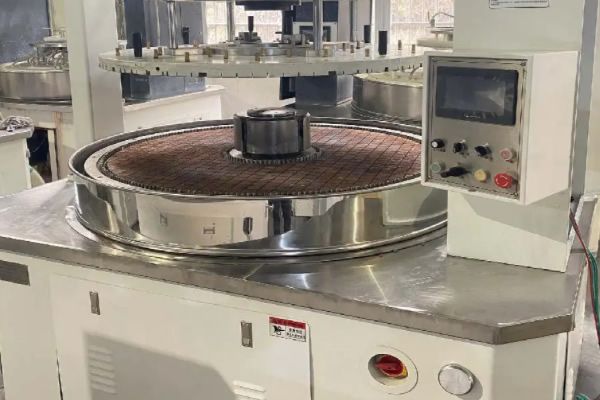
What is the cleaning method?
through grinding and polishing?
In the optical glass manufacturing process, dirt often appears on the material's surface before or after grinding and polishing, affecting the grinding and polishing operations and subsequent processes. What should we do in this situation? Actually, there's no need to worry: an abrasive cleaning agent should be used for polishing.
The cleaning agent for grinding and polishing is primarily used to remove cutting fluid, grinding and polishing fluids, cerium oxide, glass dust, stubborn mould/mold diposits, dirt and fingerprints, etc. It has an excellent cleaning effect in CNC glass processes, including micro-engraving, grinding, polishing, and tempering, and is suitable for cleaning various types of white glass, sapphire, cover glass, flat glass, touch screens, optical lenses, optical glass, and other surfaces.
It can be used to clean screen-printed glass surfaces for mobile phones, tablets, LCD screens, cover glass, optical glass, etc.